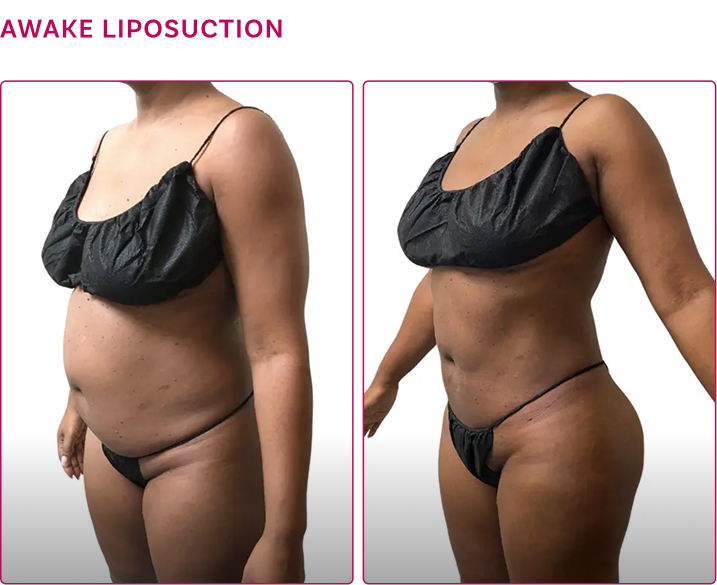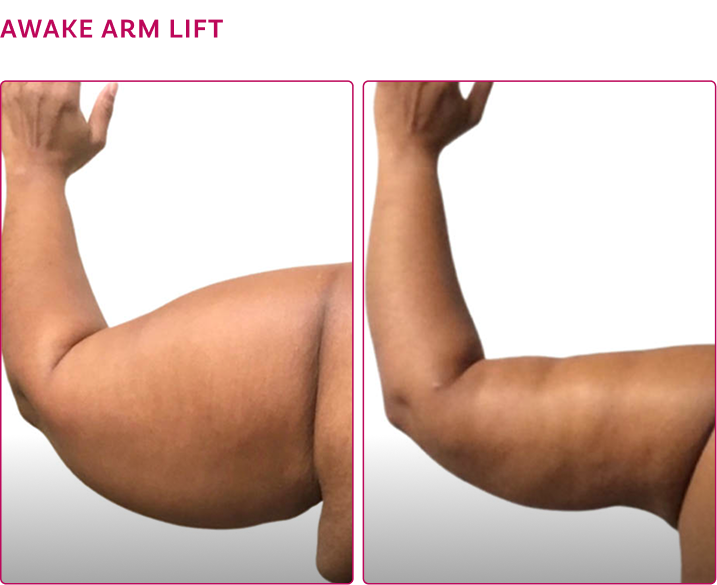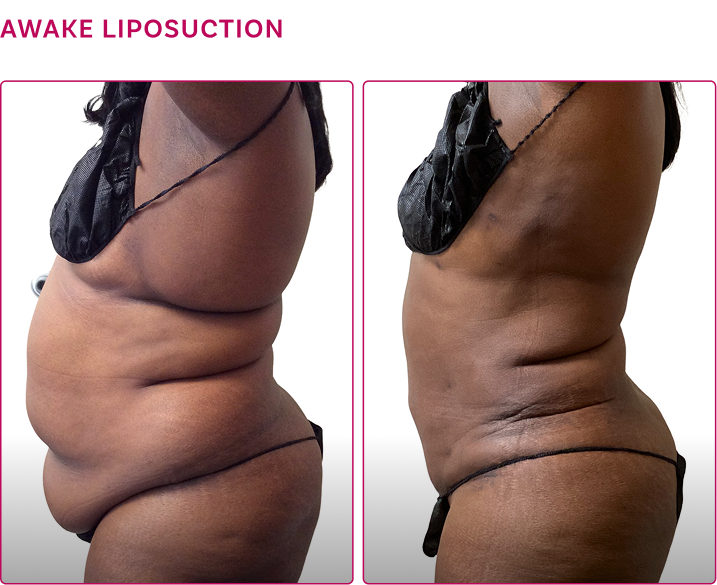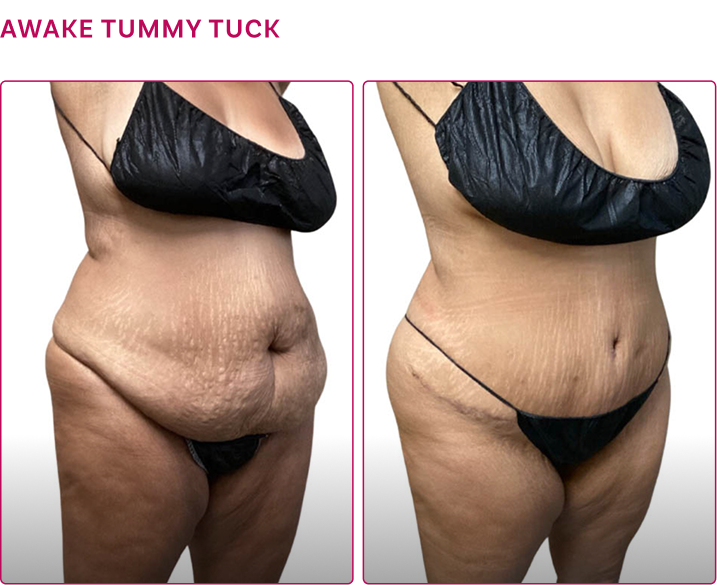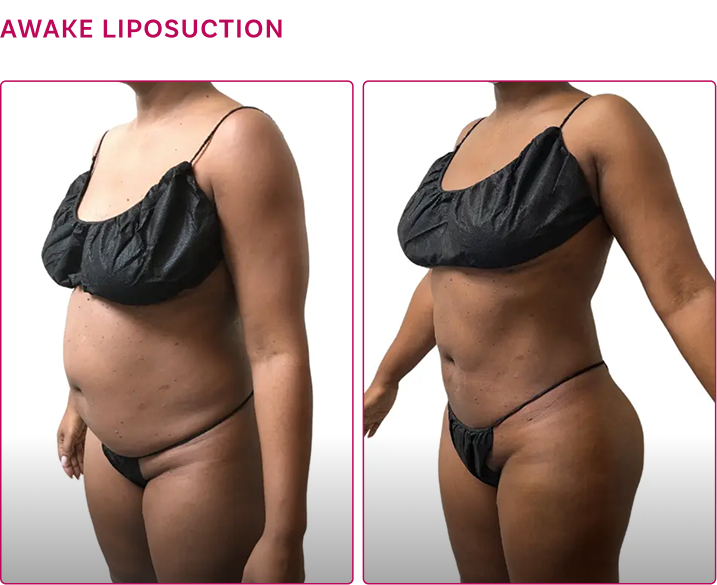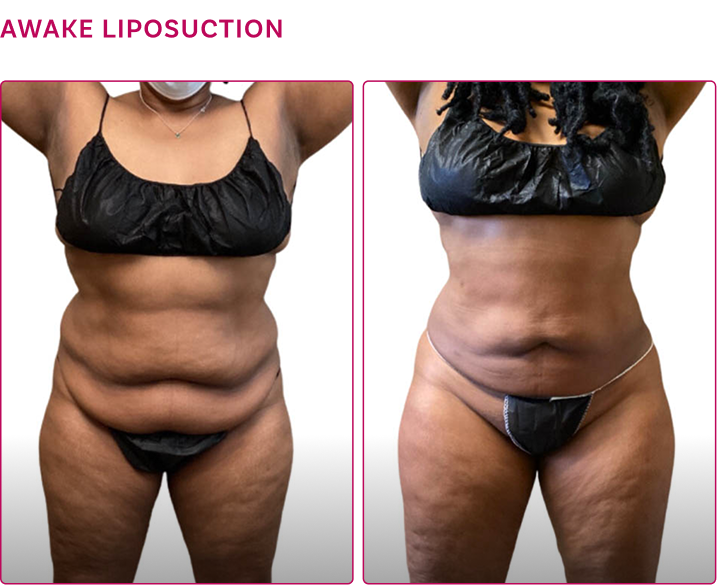
Combining liposuction with skin tightening means one treatment plan removes stubborn fat and helps the skin over that area shrink to fit your new shape. Expect recovery close to liposuction alone when the tightening is energy-based, such as Renuvion. Expect a longer recovery when the plan includes surgical skin removal, such as a tummy tuck or arm lift. Results build over several months as swelling fades and the skin contracts.
Many patients ask how to avoid trading fat for loose skin. This article, explains how fat removal affects your skin and which tightening options exist. It also covers how recovery and results usually unfold when the two are paired.
Body contouring has two parts. The first is volume, which is the fat under the skin. The second is the skin envelope that covers that fat. Liposuction addresses volume. Skin tightening addresses the envelope. A smooth result depends on both.

Skin is elastic. It stretches when fat is added and can pull back when fat is removed. How well it pulls back depends on its quality. Skin with good elasticity tends to retract on its own after liposuction. Skin that has lost elasticity may stay loose even after the fat beneath it is gone.
Several factors affect elasticity:
Age. Skin makes less collagen and elastin over time, so it rebounds more slowly.
Weight history. Large weight gains and losses stretch the skin repeatedly.
Pregnancy. The abdomen often holds stretched skin and separated muscles after childbirth.
Sun exposure. Long-term sun damage weakens the support fibers in the skin.
Genetics. Some people simply have firmer skin than others.
Smoking. Smoking reduces blood flow and harms skin quality.
When we assess a patient for liposuction, skin quality is part of that review. It shapes whether liposuction alone is enough or whether a tightening step belongs in the plan.
Not every patient needs to worry about loose skin. Patients with firm skin and a moderate amount of fat often see the skin settle smoothly after liposuction. Concern grows when a large volume of fat is removed, when the skin already shows creasing or hanging, or when stretch marks are present across the treatment area.
A simple sign is how your skin behaves now. If you pinch the skin on your abdomen or upper arm and it snaps back quickly, it likely has good recoil. If it stays folded or sags when you lean forward, it may need help to tighten after fat removal. These are general clues. An in-person exam gives a clearer picture.
Liposuction changes what sits under the skin. Once fat is removed, the skin has less volume to cover. Its response to that change largely determines how smooth the final contour looks.

We offer Liposuction to remove localized fat that resists diet and exercise. We also offer awake liposuction, which is performed under local anesthesia so patients remain comfortably awake. Both approaches remove fat. Neither one, on its own, removes skin.
After fat removal, the skin goes through a period of swelling and settling. Over the following weeks and months, it gradually adjusts to the new shape beneath it. In patients with good elasticity, this adjustment is often enough to produce a smooth, firm result. In patients with weaker elasticity, the skin may not fully catch up. The result can be mild looseness, rippling, or a deflated look in the treated area.
The amount of fat removed matters as well. Large-volume liposuction creates a bigger gap between the skin and the tissue beneath it. That is one reason we look closely at skin quality in patients who want significant fat reduction, including those considering High BMI Liposuction.
Skin tightening helps close the gap between how much fat is removed and how much the skin can retract on its own. Without it, some patients reach their fat reduction goal but feel unhappy with the texture or drape of their skin.
Tightening may be worth discussing if:
You have lost a large amount of weight, either on your own, after bariatric surgery, or with weight loss medication.
You have had one or more pregnancies.
The treatment area includes the upper arms, inner thighs, or lower abdomen, where skin tends to be thinner or looser.
You see crepey texture or mild sagging before treatment.
You plan large-volume fat removal.
Planning for tightening at the start often gives a more predictable result than adding it later.
Skin tightening options fall into two broad groups. Some remove excess skin surgically. Others use energy to encourage the skin to contract and build new collagen. The right choice depends on how much loose skin is present.
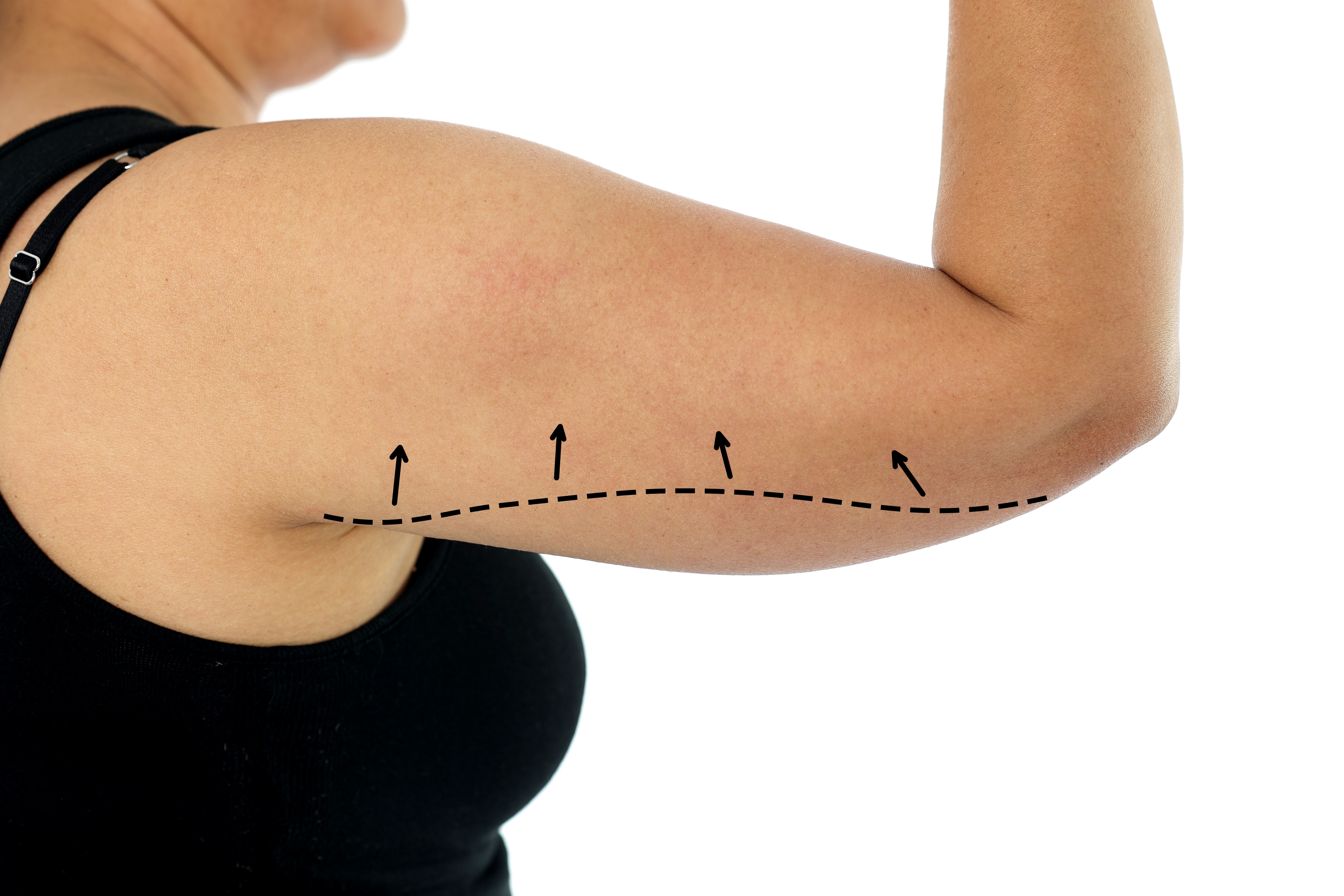
Surgical skin tightening removes excess skin and reshapes the remaining tissue. It is the most direct option for skin that hangs or folds. Surgical options we offer include:
Tummy tuck, which removes excess abdominal skin and tightens the abdominal muscles.
Awake Tummy Tuck, which tightens abdominal muscles and removes excess skin under local anesthesia.
Arm lift, which removes excess skin and fat from the upper arms.
Body lift, which addresses sagging skin and tissue around the abdomen, thighs, and buttocks.
Surgery after weight loss, which removes and reshapes excess skin and tissue that can remain after significant weight loss.
Panniculectomy, which are part of our High BMI procedure focus.
Surgical tightening leaves a scar, and recovery takes longer than with energy-based treatment. For patients with true excess skin, though, it is often the only way to get a flat, firm contour.
Non-surgical and minimally invasive tightening does not remove skin. Instead, it uses controlled heat or energy to contract the tissue and stimulate collagen. These options suit mild to moderate looseness. They leave little to no scarring and usually add little downtime when paired with liposuction.
Our team uses and has written about several energy-based tightening options:
Renuvion. Renuvion is a skin tightening technology we pair with awake liposuction, including arm liposuction. It works beneath the skin to help it contract. Because it is done during the same session as liposuction, it adds tightening without a separate procedure day. Patients often ask about it for the arms, abdomen, and neck.
Through our medspa, we also offer cellulite reduction and lymphatic drainage massage. Cellulite treatment can improve surface texture, which some patients notice more once fat is reduced. Lymphatic drainage massage supports recovery by helping the body clear swelling.
Energy-based methods produce gradual change. Collagen remodeling continues for months, so results keep improving well after treatment.
Pairing fat removal with tightening lets one plan address both volume and skin. For many patients, combining treatments means one recovery period rather than two.
A combined approach makes sense when your goals involve both fat and skin. Common examples from our procedure requests include:
Awake liposuction with skin tightening. Patients with moderate fat and mild to moderate laxity often choose awake liposuction paired with Renuvion.
Arm liposuction with skin tightening. The upper arms are a frequent concern. Arm liposuction with Renuvion suits mild looseness. An arm liposuction and lift suits arms with hanging skin.
Tummy tuck with liposuction. Patients with loose abdominal skin and extra fat on the flanks or back often pair a tummy tuck with Lipo 360. This can be done as an awake tummy tuck with liposuction.
High BMI liposuction and tummy tuck. Plus-size patients who want large-volume fat reduction and skin removal can address both in a single plan.
Body contouring after weight loss. Patients who have lost significant weight often need a mix of liposuction and skin removal across several areas.
The key question is how much loose skin will remain once the fat is gone. If the answer is a little, energy-based tightening may be enough. If the answer is a lot, surgical removal is usually needed.
A combined treatment is one piece of a larger plan. Some patients reach their goals with a single session. Others plan their care in stages.
Many patients start with weight loss. We offer weight loss injections, including semaglutide and tirzepatide, through our medspa. Once weight is stable, liposuction and tightening can shape what remains. Patients who reach a stable weight before surgery tend to keep their results more easily.
Other patients combine several body areas at once, such as abdomen, flanks, back, and arms. Our Awake 360 Lipo and awake tummy tuck options are often part of these plans. A Mommy Makeover is another example, where tummy tuck, breast surgery, and liposuction are combined to address changes after childbirth.
During your consultation, we look at your health, body structure, fat distribution, and skin quality. From there, we recommend whether to combine treatments, which tightening method fits, and whether staging makes sense. You leave with a clear plan built around your body and your goals. The details depend on which treatments you combine.
Recovery after liposuction with energy-based tightening is usually similar to recovery after liposuction alone. Expect swelling, bruising, and tenderness in the treated areas. These ease over the first few weeks. Many patients return to light daily activity within days.
Recovery after liposuction combined with surgical skin removal takes longer. Procedures such as a tummy tuck, arm lift, or body lift involve incisions that need time to heal. Patients typically need more rest at first and a slower return to exercise and lifting.
Patients choosing awake procedures avoid general anesthesia. Awake liposuction is performed under local anesthesia, and High BMI Awake Liposuction uses local anesthesia with sedation. Many patients find that being awake helps them feel more alert soon after their procedure. You can read more in our post on awake procedures.
Steps that support recovery include:
Wearing compression garments as directed to control swelling and help the skin settle.
Walking gently soon after your procedure to support circulation.
Scheduling lymphatic drainage massage to help reduce swelling.
Eating well. An anti-inflammatory diet can support healing.
Staying hydrated and avoiding smoking.
Following your aftercare instructions for activity, bathing, and follow-up visits. A few general points help set expectations.
Skin tightening improves laxity, but it has limits. Energy-based treatments cannot remove large folds of hanging skin. If your skin is very loose, an energy-based option alone may leave you short of your goal. A surgical option may serve you better.
Your overall health matters. Conditions such as diabetes, high blood pressure, and smoking history affect healing. Being honest about your health history helps us build a safe plan.
Weight stability matters too. Significant weight gain after treatment can stretch the skin again and change your contour. Patients who plan pregnancy may also want to time body contouring with that in mind.
Finally, combined procedures take more planning. Treating several areas at once can mean a larger session and a longer recovery. Our team helps you weigh what to combine and what to stage.
Results appear gradually. In the first weeks, swelling hides much of the change. As swelling fades over the next few months, your new contour becomes clearer.
With energy-based tightening, skin firmness continues to improve for several months as new collagen forms. Patients often notice smoother skin and a tighter drape over the treated areas. With surgical skin removal, the change in contour is more immediate, though swelling still takes time to resolve and scars fade over the following year.
Most patients can expect:
A slimmer, more defined shape in the treated areas.
Smoother skin compared with liposuction alone in areas with laxity.
Clothes that fit differently, especially around the waist and arms.
Long-lasting fat reduction in treated areas when weight stays stable.
Understanding these timelines is central to combining liposuction with skin tightening. Patience during the first few months pays off as the skin settles into its final shape.
Liposuction removes fat, but it does not remove skin. Whether you need tightening depends on your skin quality, the amount of fat removed, and the area treated. Energy-based options such as Renuvion suit mild to moderate laxity with little added downtime. Surgical options such as a tummy tuck, arm lift, or body lift suit more significant loose skin. Combining Liposuction with Skin Tightening: What to Expect comes down to a tailored plan, a recovery matched to the treatments chosen, and results that improve steadily over several months.